
In the converting and flexible packaging industry, precision is everything. One of the main determinants of the quality of the jumbo roll cut is the selection of the right slitting knife on the slitter rewinder machine. If the knife used does not match the characteristics of the material, production will be susceptible to defects such as hairy cuts (burrs), stretchy material, and material line breaks which cause waste (downtime). This article will discuss the three main types of slitting knives along with their methods and specifications for use so that you can maximize efficiency on your flexible packaging machine.
Why is choosing the right slitting knife so crucial?
Each flexible packaging material, from BOPP, PET, PE plastic, to aluminum foil and laminated paper, has different thickness, tensile strength and sensitivity. Using a precision cutting system will provide benefits in the form of:
-
Perfect final roll quality: the edges of the material are neat and dust-free.
-
Reducing waste (production waste): minimizing the risk of material tearing during the cutting process at high speeds.
-
Longer component life: reduces the frequency of blade replacement, which has a direct impact on machine productivity.
3 main slitting knife methods and types
1. Shear slitting (circular blade)
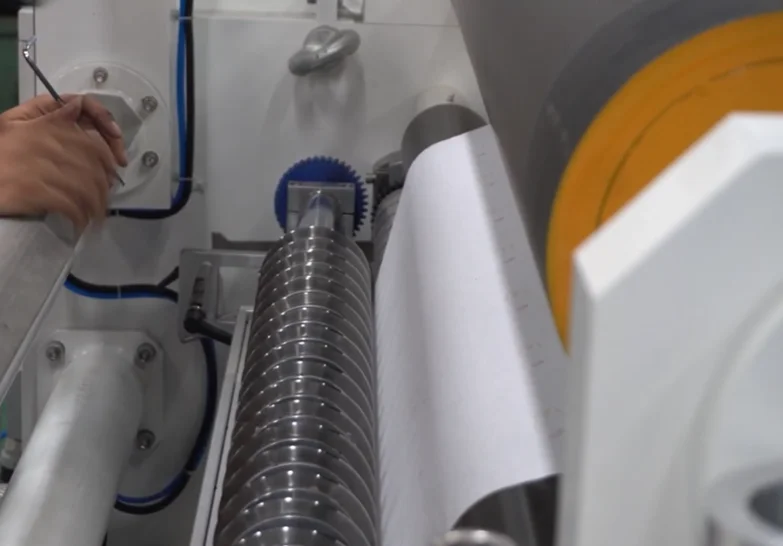
Source: Shear slitting knives on Intermac production floor
The shear slitting method is the most widely used industry standard for high-quality flexible packaging. This system uses two circular blades. One above (top blade) and one below (bottom anvil), which rotate in contact with each other, adopts the working principle of scissors.
-
How it works: the material is pulled and cut between the intersection of the upper and lower blades. The angle (cant angle) and shear pressure (overspeed) must be set very precisely.
-
Ideal use: highly recommended for cutting thick plastic films, laminated materials, aluminum foil and paper.
-
Advantages: produces very clean, lint-free cutting edges, and is capable of operating at very high machine speeds without sacrificing quality.
2. Razor slitting (razor blade)
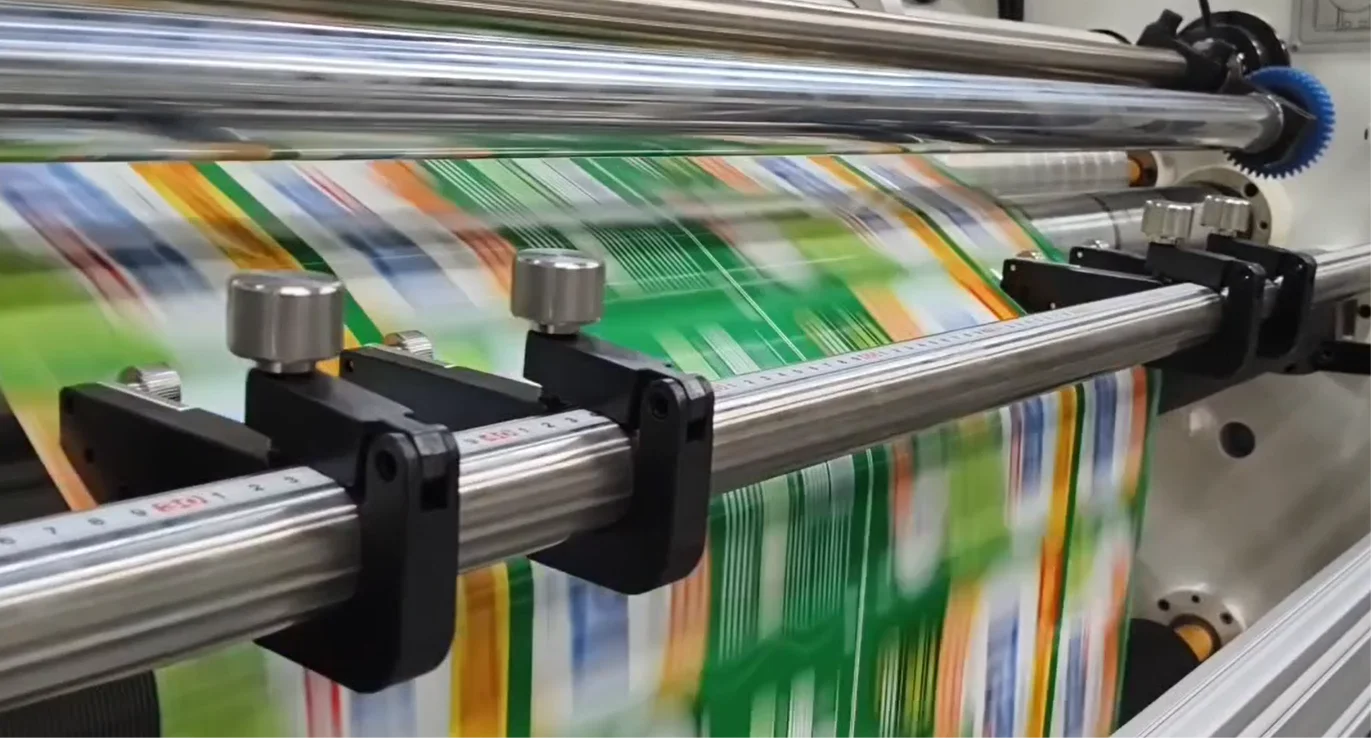 Source: Razor slitting on ISL-150H machine on production floor when trial running
Razor slitting offers the simplest and most economical cutting method. This method uses a thin, razor-like blade (either straight lengthwise or circular) which is positioned still.
-
How it works: the material is pulled across a sharp knife blade. Can be applied in empty air (razor in air) or with a grooved cylinder holder (razor in grooved roll) for extra stability.
-
Ideal use: best solution for cutting very thin, light, high-stretch plastic films such as thin PE and bopp.
-
Advantages: the setup process is very fast and the price of the knife is very affordable. However, this knife dulls more quickly so it must be replaced more often to avoid rough cuts.
3. Crush cut/score slitting
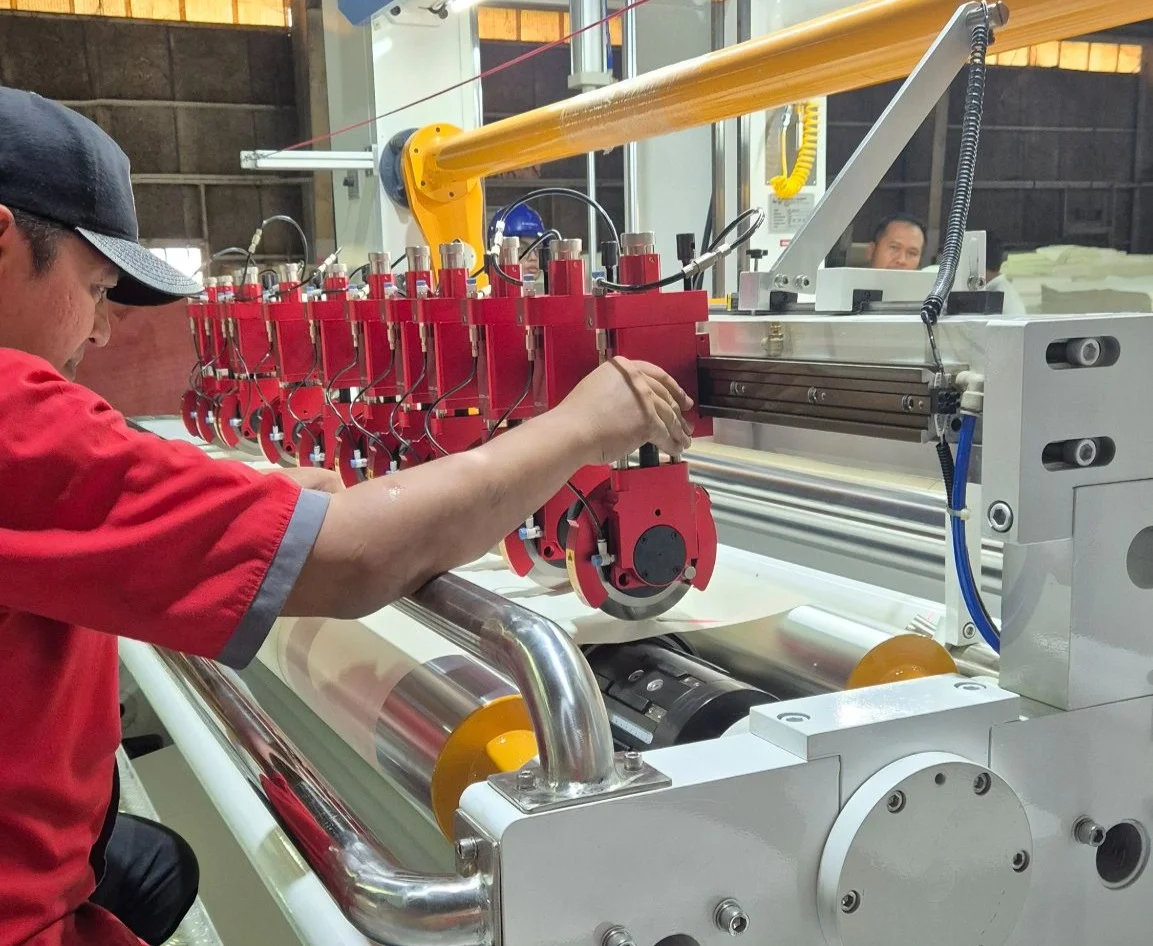 Sumber: Score slitting knives on ISL-280SF on customer factory floor
Unlike the previous two methods which rely on pure sharpness, crush cut relies on mechanical pressure to break material.
-
How it works: a round knife with a slightly blunt tip is pressed down using a pneumatic system, clamping the material until it breaks over a very hard steel anvil roll.
-
Ideal use: less suitable for thin plastic films, but very reliable for cutting thick paper, adhesive tapes or nonwoven materials.
-
Advantages: produces good cuts in materials that are difficult to cut by sliding or slicing. The pneumatic blade attachment allows for very quick adjustment of the cut width.
Blade material: the key to cutting durability
Apart from the method, the material the blade is made from also determines how efficiently your slitting machine operates. For flexible packaging, knives are generally made from:
-
High-speed steel (hss): durable and able to maintain sharpness for a long time for various types of plastic.
-
Tungsten carbide: has extreme hardness, is ideal for cutting aluminum foil or abrasive materials, and provides a much longer blade life than regular steel.
Understanding the characteristics of the packaging material you produce is a crucial first step before determining the type of knife and slitting method. The use of sturdy shear slitting, economical razor slitting, or powerful crush cut must be aligned with machine specifications to obtain optimal roll results and reduce production costs. If you are looking for a solution to improve the quality of your converting, ensuring a slitter rewinder machine is equipped with the best blade system and precise web guiding technology is a very worthwhile investment.
-


